
One Odoo platform for construction and production at TM Technics.
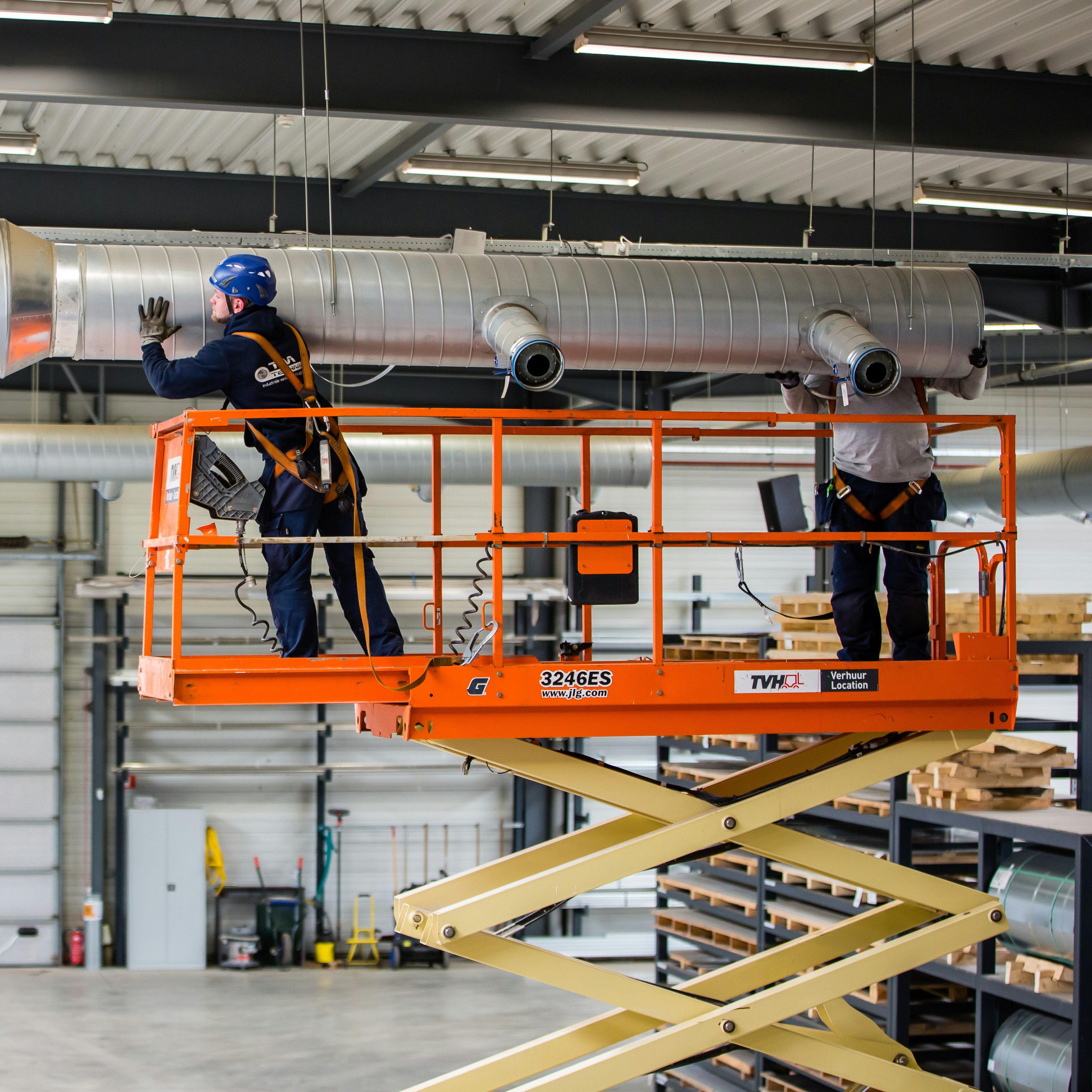
After a prior ERP attempt had stalled and left the team demotivated, TM Technics rebuilt on Odoo with Dynapps, going live on 1 July 2023 with 19 users across construction, production, and project costing.
Sector
Construction, transitioning into manufacturing.
Footprint
Belgium (Houthalen), occasionally NL.
Scale
34 employees, 19 users on Odoo.
Dynapps partner
Since 2023.
Backing
Family-owned (Tom and Els Stappers).
Before Dynapps stepped in.
By the spring of 2022, TM Technics had a problem that was not purely operational. A prior ERP project had been attempted, had not landed, and had taken real money with it. More painfully, it had taken energy from the team: the staff had grown demotivated about ERP as a category. Tom Stappers had originally built the company as a construction and assembly firm; production had grown into a serious share of revenue, and his wife Els, now also a managing director, was leading the next attempt. A digital transformation consultancy, Brain-Storm BV, represented by Tim Drijkoningen, was already on board to help scope the replacement. The question approaching was not whether to try ERP again. It was who could make the second attempt land where the first had not.
The challenge
Where the cracks showed.
Demotivation from a project that didn't land
Money had been spent, time invested, energy given. The previous ERP project had not delivered, and the team had taken that personally. By 2022, the word “ERP” triggered scepticism on the floor before it triggered curiosity. Any new attempt had to win that team back before it could win anything else.
Steel at war prices
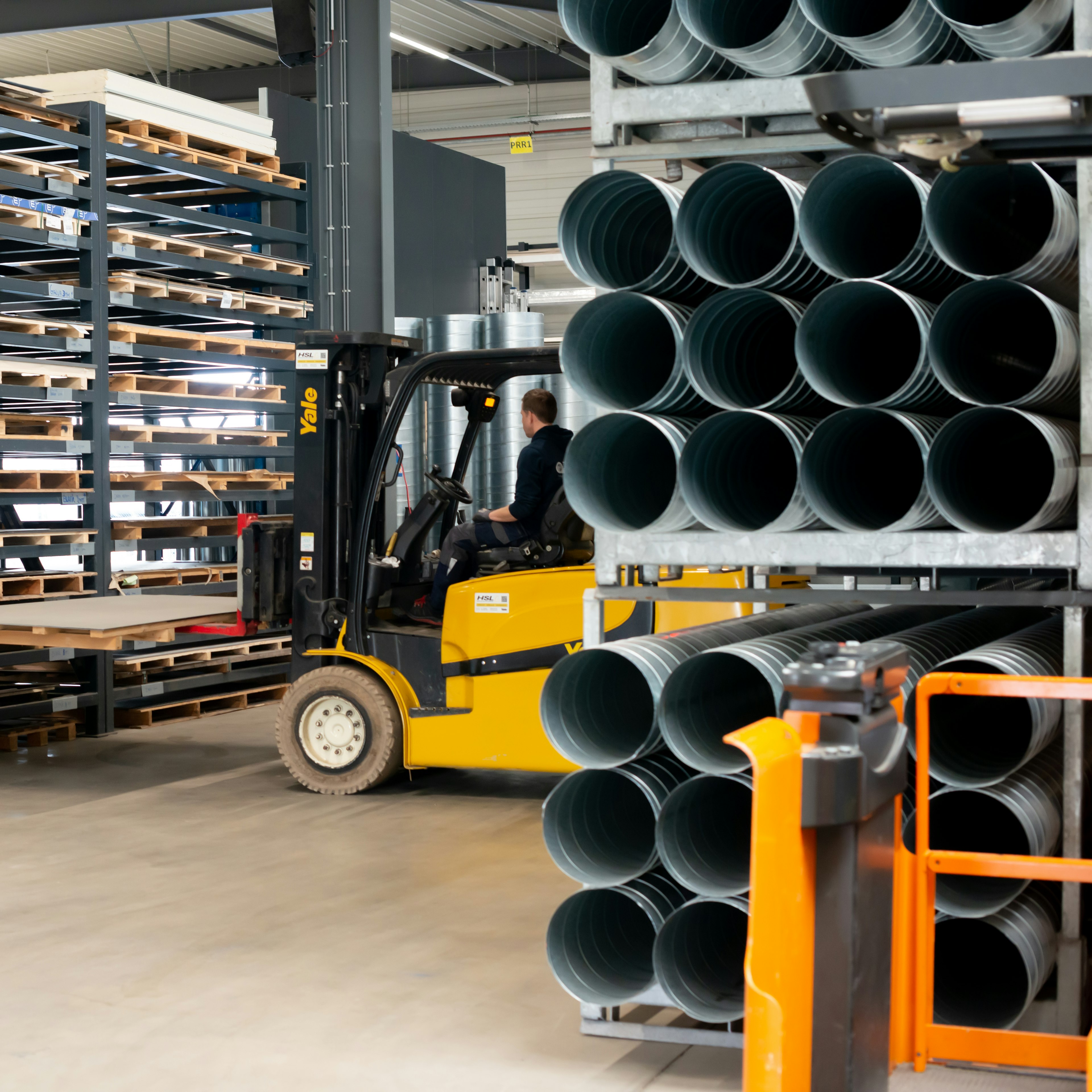
When the war in Ukraine pushed steel costs up overnight, TM Technics could not reprice fast enough. Quotes that left the office on a Monday were the wrong number by midweek, and the team had no system view that could help them recalibrate. It was a system-readiness problem, not a finance one.
Profitability surfacing too late
Cost visibility across construction and production lived in separate places. By the time a project closed, the calculation that should have shaped the offer was happening in retrospect. Whether the price had covered the real cost, and where margin actually sat, were questions the company could not answer when they mattered.
Why TM Technics gave ERP a second attempt with Odoo and Dynapps.
The trigger was a combination of forces. Production had become a material share of revenue. The war in Ukraine had pushed steel prices up overnight, and the company had no system view that could help it reprice fast. The prior ERP project that had not landed was still recent. Money had been spent. More importantly, motivation had been lost. That last point shaped the second selection from the start. The criteria were no longer just about software fit. They were about whether a new attempt could convince the floor that it would not be a repeat.
Three filters in the room:
Speed-to-value over feature breadth.
A long implementation would have risked a second stall, and a second stall would have looked like proof that ERP itself was the problem. Whatever came next had to show up fast.
A partner who stays close, not one with the longest reference list.
The first attempt had failed in part because the relationship had been transactional. The criterion this time was who would still be on the floor in month nine, not who had the most logos on a slide.
A partner who would embed in how the company actually worked.
Brain-Storm BV, represented by Tim Drijkoningen, scoped the replacement. The search converged on Odoo with Dynapps as partner. Els is direct: she wanted someone who would still be on the floor when something needed to change, not someone delivering software and stepping away.
How the rollout really happened
How TM Technics went live on Odoo in fifteen months.
Early 2022
First contact with Dynapps at Odoo Tour Genk.
End 2022
Workshop phase, run in tight cadence.
Early 2023
Elaboration phase, in close alignment with Els as the single point of contact.
End 2023
Go-live on Odoo. Reported by Els as smooth and error-free.
2026
Still running on the version they went live with. No upgrades performed yet.
What TM Technics built on Odoo: seven modules and a calculation tool.
Seven Odoo modules plus one bespoke calculation tool. The tool consolidated cost visibility and moved budget management to the offer stage.
Before, calculation lived across multiple cost centres with no shared view; project-level profitability surfaced too late. After, the same numbers sat in one place at the moment a quote was being built.
The engagement was lean: two functional consultants from Dynapps (one logistics, one financial), one technical, and Els as single point of contact, with up to three others joining workshops. Consultants embedded on the floor, conducted interviews, and observed how production actually ran.
Modules: CRM, sales , purchase , inventory, manufacturing, project, accounting, custom calculation tool
The discipline throughout.
One operating principle held throughout: standard Odoo first, customization only where a specific business case justified it. The custom calculation tool is where the principle bent on purpose, the one place a specific business need outweighed the cost of building.
When standard Odoo doesn’t mean standard for everyone.
The hardest moment was not technical. A long-tenured employee at TM Technics had his own way of working, built over many years, and he was not going to convert to a new system on someone else’s timeline. Pushing through would have risked re-creating exactly the demotivation the second attempt was supposed to escape.
The project team made a deliberate compromise. The parts of Odoo he would have had to use were reduced to the absolute minimum needed for the company to get the data it required. He kept most of his existing workflow and entered just enough into the system so that TM Technics had what it needed for cost analysis. From the company’s side, nothing else suffered.
The lesson, named honestly: “standard Odoo first” does not always mean standard adoption for every person on the team. Sometimes one person’s path through the system is a different shape, and accepting that is the price of keeping everyone moving.

It is impossible for one person on your team to know everything about ERP. You need a partner who does.

Els Stappers
Managing director, TM TechnicsClustered workshops compress decision time.
Workshops scheduled close together compress decision time. TM Technics ran its workshop phase in October and November 2022, back to back, and the project moved through the elaboration phase faster than a spaced-out schedule would have allowed. The pattern was not an invention; Dynapps partly knew it before TM Technics. What TM Technics did was confirm it strongly enough that the recommendation for a clustered workshop block now goes out more deliberately, when the customer has the bandwidth for it. It is a small adoption rather than a new pattern, and naming that scale is part of the lesson.
The numbers
By mid-2023, construction and production ran on one Odoo platform.
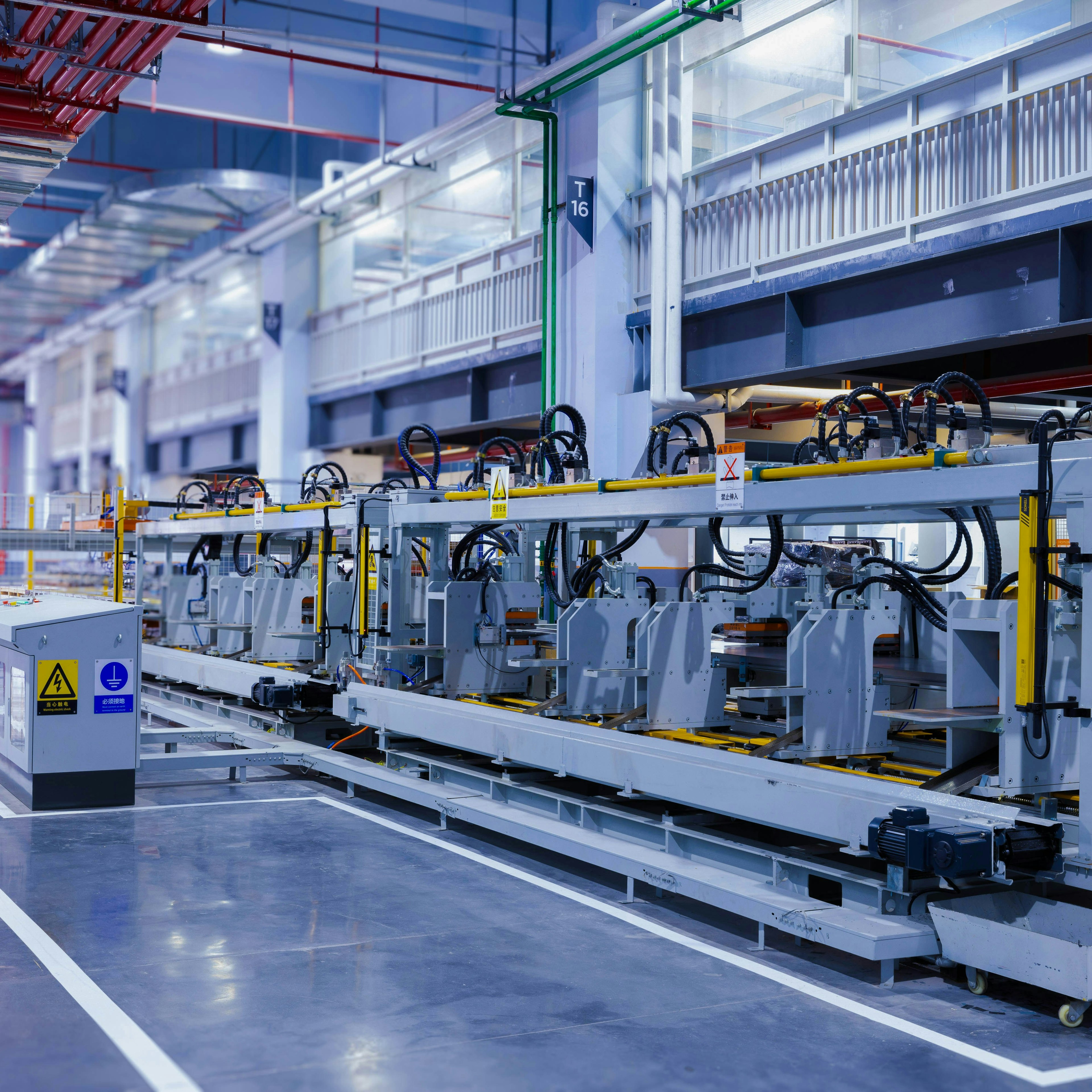
The second attempt landed where the first had not. Construction, production and project costing came onto one Odoo platform in a single go-live on 1 July 2023, reported as smooth and error-free, with nineteen users across the floor. Seven standard modules carry the day-to-day work, and the one bespoke tool, the calculation engine, puts cost visibility in the same place the offer is built.
19
users live on Odoo.
15
months from first contact at Odoo Tour Genk (April 2022) to go-live (1 July 2023).
7
standard Odoo modules plus one bespoke calculation tool.
From ‘did we price that right?’ to ‘are we pricing this right?’
The default question at TM Technics has changed. Before, project profitability was a retrospective inquiry: after a project closed, finance would try to piece together whether the offered price had covered the real cost. Now the question moves to the front. At the offer stage, the calculation tool surfaces the cost components, and the question becomes “are we pricing this right?” rather than “did we price that right?” That shift, from looking backwards to looking forwards on margin, is the win that justified the one piece of customisation. It is also what makes the second-attempt-ERP story land: this time the system shows up at the moment the decisions are being made.
If this sounds familiar, let’s talk.
Wherever your business is heading and wherever it's getting stuck, an expert who has run this kind of work is the right person to start with, before you commit to a direction or a platform.
Go deeper
Read further.
Implement Odoo
From blueprint to go-live, built around how your industry actually operates.
Replacing a legacy ERP
The ERP that built the business now holds it back. Ten or twenty years of SAP Business One, Exact, Navision, Sage, or a custom build sits at the centre of operations, wrapped in integrations and spreadsheets only a few people understand.
Manufacturing
Production floor, finance, and supply chain in the same language.
More stories like this
- Food & beverage
Food & beverage
Cazes: Odoo at the counter, SAP for the group books
Cazes moved its boutique and wine-fair sales onto Odoo Point of Sale, retired a clumsy SAP Fiori till, and left accounting, invoicing and alcohol duties on the Advini group's SAP S/4.
- Manufacturing

Manufacturing
How Nobi tracks every smart lamp from the Belgian assembly line to the care room.
A fast-growing health-tech manufacturer tried to stand up Odoo itself, hit a wall on serial-number traceability, and turned to Dynapps to clean up the setup and rebuild the flow, from component picking to a fully documented, serial-tracked finished product.
- Retail & wholesale
Retail & wholesale
Ergonomio replaced a twenty-year custom FileMaker webshop with one Odoo platform.
Moving from a bespoke FileMaker system to standard Odoo meant rebuilding every product record and letting go of a two-decade-old way of working.
- Energy & utilities

Energy & utilities
One Odoo platform for a multi-company energy consultancy: Tunérgia replaces Telegram, Excel and scattered tools
After sixteen years on paper, Excel and Telegram, Tunérgia put its multi-company energy consultancy onto one Odoo platform with Dynapps: leads, projects, signatures and surveys in one traceable place.
- Financial services

Financial services
How Régie Châtel runs every PPE assembly on one platform
A Swiss family agency runs more than 100 condominium administrations on a single custom platform built with Dynapps. It replaced a workflow of Word mail-merges and Excel trackers.
- Food & beverage
Food & beverage
One Odoo template across 14 Puratos production sites in four continents
Belgian family-owned ingredients manufacturer, 75 production units across 55 countries. Kept SAP at the largest sites; built one Odoo template for the smaller acquisitions.
- Financial services

Financial services
One Odoo backbone, from 100 to 36,000 leased bikes
Cyclis Bike Lease grew from a four-founder startup in Hasselt to 36,000+ leased bikes. Dynapps replaced the founders’ DIY setup with a single Odoo platform that scales with the business.
- Laboratories

Laboratories
Seven specialised labs on one integrated Odoo and LIMS platform
Seven specialised lab departments across Oman, 65,000 samples a year. The group replaced a legacy LIMS and added an ERP on one integrated Odoo and LIMS platform in four months.
- Energy & utilities
Energy & utilities
Sensorfact replaced gut-feel purchasing with Odoo
Dutch climate-tech scale-up, 200+ people serving 1,600 industrial customers in 40 countries. Odoo replaced gut-feel purchasing with one system for purchase, inventory, accounting and sales in five months.
- Retail & wholesale

Retail & wholesale
One Odoo across sales, purchasing, accounting: four-month cutover
Swiss distributor of corporate clothing and promotional products, with 13 users on Odoo. One platform now covers sales, purchasing and accounting, ending a multi-year search.